
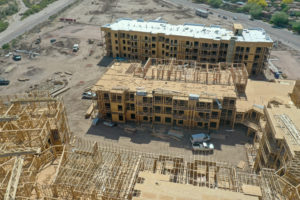
Unmanned aerial vehicles, or drones, have become a game-changing tool in the building sector. They have become an essential tool for construction organizations thanks to their adaptability, accessibility, and cutting-edge capabilities.
1. Improved Planning and Visualization:
The construction sector has experienced a revolution in site surveying and mapping thanks to drones with high-resolution cameras and sensors. Traditional site surveying techniques can be labor-intensive and time-consuming. However, drones can quickly and efficiently take pictures from the air and build precise 3D models of construction sites. These models give architects, engineers, and project managers a thorough visual depiction of the site, enabling them to learn important details about the project’s structure and strategy.
Construction professionals may identify potential obstacles, assess the terrain, and make accurate choices before starting the construction process with the use of aerial maps and 3D models produced by drones. By reducing surprises, streamlining workflows, and optimizing resource allocation, this better project visualization and planning lead to increased efficiency and decreased costs.
Drones also make effective reporting and progress tracking possible. Drones give project managers the ability to compare actual progress to the timetable by taking aerial pictures or videos at regular intervals. Construction personnel are now better equipped than ever to precisely track project milestones, spot delays or deviations, and take preventative action to solve problems. Drone-based progress monitoring’s capacity to actively monitor construction projects results in better project management, better resource allocation, and increased overall efficiency.
2. Enhancing Safety Measures:
Drones significantly improve safety measures in the construction business, which places a high priority on safety.
With their advanced cameras and thermal sensors drones can conduct thorough inspections and risk assessments without putting human lives at danger. In the past, assessing big buildings or high-rise structures was a time-consuming, dangerous task that needed people to physically enter dangerous areas. Drones allow construction workers to remotely inspect difficult-to-reach regions, spot structural flaws, find leaks or other issues, and carry out thorough risk analyses. Drones drastically lower the risk of accidents and injuries on building sites by doing away with the necessity for manual inspections.
Drones also reduce the need for workers to enter hazardous or dangerous places on foot, improving worker safety. Drones can conduct surveys and collect data in real-time in places where human employees might be at risk, as in hazardous constructions or at great heights. This lowers the likelihood of accidents and injuries by minimizing the exposure of workers to potential hazards and allowing them to concentrate on safer duties.
3. Reliable Data Gathering and Analysis:
Precision data gathering and analysis are made possible by drones with cutting-edge sensors and image technologies, transforming many facets of the construction sector.
In a short length of time, drones can gather enormous volumes of data and take precise measurements. They can measure volumes, elevations, and distances with extreme precision, providing construction workers with accurate data for a variety of uses. Quantity takeoffs, stockpile management, site progress analysis, and quality control can all be done using this data. Drone data collecting is accurate and efficient, which leads to less errors, better decision-making, and better project outcomes.
Drones also facilitate stakeholder engagement and communication in construction projects. Drones offer a visual depiction of the construction site through aerial photos and video, enabling architects, engineers, project managers, and other stakeholders to effectively communicate and collaborate on design modifications, solve problems, and make sure everyone is on the same page. This in-the-moment visual information increases comprehension, lessens misconceptions, and boosts project coordination, resulting in more effective and fruitful building projects.
Conclusion:
Drones have transformed the building sector by providing superior planning and visualization. Contact us today.