
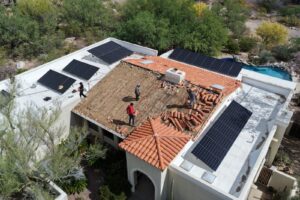
Your Phoenix roof works harder than roofs almost anywhere else in the country. The extreme heat — 115 degrees Fahrenheit and above in summer — is relentless. Our dust storms, known as haboobs, can tear off loose materials and expose vulnerabilities in hours. Hail during monsoon season can crack shingles or tiles. And the constant exposure to intense UV radiation breaks down roofing materials faster than in virtually any other climate in North America.
If you live in Phoenix and have not had a professional roof inspection in the past couple of years, you need one. A drone roof inspection gives you a complete picture of your roof’s condition without anyone climbing a ladder — which is genuinely dangerous in Arizona heat and completely unnecessary with modern drone technology. The surface of a Phoenix roof in summer can exceed 150 degrees, making physical inspections a real safety hazard.
We are Desert Drones LLC, and we have conducted hundreds of drone roof inspections throughout Phoenix and the surrounding areas, including Scottsdale, Tempe, and Chandler. We use high-resolution cameras and thermal imaging to spot problems before they become expensive. We give you a detailed report so you know exactly what is happening on your roof and what needs attention.
Phoenix’s Unique Roof Challenges
Phoenix roofs face specific challenges that homeowners in milder climates simply do not experience. First is the heat. Extreme temperatures cause roofing materials to expand and contract constantly. The temperature swing from a 115-degree afternoon to a 70-degree morning creates thermal stress that compounds year after year. This cycling leads to cracks, splits, and deterioration in shingles, tiles, and sealants.
Then there are the storms. Arizona’s monsoon season brings intense wind and rain. A 70-mile-per-hour wind gust can tear off loose tiles or shingles in minutes. Heavy rain afterward finds its way through any weakness in your flashing or sealants. We see a significant amount of weather damage on Phoenix roofs, and much of it goes unnoticed until water shows up inside the home — often in the walls, where it causes hidden structural damage and mold.
Add UV radiation on top of all that, and your roof is under constant attack. The sun breaks down sealants, fades materials, and makes shingles brittle over time. Tiles develop micro-fractures that grow into bigger problems. Most Phoenix roofs reach the end of their effective lifespan faster than roofs in other regions — sometimes years faster than the manufacturer’s estimate assumes.
Our Drone Roof Inspection Process
Here is how we work: You schedule an inspection at a time that fits your schedule. We arrive with a professional drone equipped with high-definition cameras that capture every detail of your roof. We schedule inspections for early morning or late afternoon when ambient temperatures are more manageable, though our drones operate in any conditions.
We fly the drone around your entire roof, shooting from multiple angles and altitudes. We zoom in close enough to see specific issues — individual tile cracks, deteriorated flashing, missing sealant, debris accumulation in valleys. We also get wide shots so you can see the overall condition of your roof and how it compares to normal. We document everything systematically so you get complete coverage with no blind spots.
There is no climber on your roof in the Arizona heat. No risk of injury. No damage to sun-brittle materials from someone walking on them. Just quick, safe, professional documentation. Within a few days, you get a detailed report with high-resolution photos and clear recommendations in plain language — not industry jargon. We tell you what is fine, what needs attention soon, and what is urgent.
What We Look For During Your Phoenix Roof Inspection
We examine several key areas during every drone roof inspection. We check the condition of shingles or tiles — are they cracked, curled, lifting, or missing? We look at flashing around chimneys, vents, and skylights, since these are the most common leak points on Phoenix roofs. We assess gutter condition and check for debris accumulation in critical areas.
We also look at overall structural integrity. Is the roof sagging anywhere? Are there soft spots that might indicate hidden water damage? What is the estimated remaining lifespan based on materials and current condition? We document all of this and give you a realistic picture so you can plan and budget proactively rather than react to an emergency.
Haboob and Monsoon Season Damage
Phoenix’s haboob season — typically June through September — creates specific risks for your roof. A major dust storm can tear off loose tiles, expose underlayment, or damage flashing in a single event. Heavy rain following a haboob can cause sudden flooding in areas that seemed fine before. We see a lot of roof damage after these events, and much of it is not immediately obvious from the ground or inside the home.
After a significant haboob or monsoon storm, a drone roof inspection is smart. You will know whether you need repairs, whether damage is more serious than it looks, and you can document everything clearly for insurance purposes. Having professional documentation before and after a storm event makes the insurance claims process significantly smoother.
Heat Damage and Material Degradation in the Desert Climate
Phoenix’s heat causes specific types of roof damage that are unique to desert climates. Shingles become brittle and prone to cracking. Sealants fail years earlier than they would in moderate climates. Flashing comes loose as materials expand and contract with extreme temperature swings. Tiles develop micro-fractures that grow into leaks over time.
A drone inspection identifies signs of this thermal stress early. We look for material brittleness, sealant failure, flashing gaps, and evidence that your roof is approaching the end of its useful life. This information lets you plan and budget for replacement before you face a sudden emergency — which is always more expensive than planned maintenance near Camelback Mountain or South Mountain Park.
Roof Inspection Before Buying or Selling
If you are buying a home in Phoenix, a roof inspection is one of the smartest steps you can take. Arizona homes represent a significant investment, and the roof is a critical system. Knowing its actual condition before you buy helps you negotiate repairs or price adjustments. If you are selling, getting ahead of roof issues prevents problems during the buyer’s inspection period and can actually strengthen your negotiating position.
We work with home buyers, sellers, and real estate agents throughout Phoenix, Scottsdale, Tempe Town Lake area, and the surrounding communities. A professional drone roof inspection provides documentation that is objective and hard to dispute.
How Often Should Phoenix Homeowners Get a Roof Inspection?
We recommend drone roof inspections every two to three years for most Phoenix homes. Given the extreme climate, more frequent inspections make sense as your roof ages. If your roof is over 15 years old, consider annual inspections. If you are seeing any signs of damage — staining on interior ceilings, granules in your gutters, or visible tile cracks — do not wait. Get an inspection immediately.
The cost of addressing a minor problem is a fraction of what water damage repair costs after a leak has progressed into your walls and attic. Regular inspections catch small problems while they are still small.
Ready to schedule? Contact Desert Drones LLC today. Whether you live near Camelback Mountain, in Scottsdale, near the Desert Botanical Garden, south of the city near South Mountain Park, or anywhere else in the Phoenix area, we will give you the clear, detailed information you need to protect your home and make smart decisions about your roof.