
Colorado's 300 days of sun make Denver one of the best solar markets in the country — and its hail makes it one of the hardest on panels. Drone inspection reads a whole array in minutes: hot cells, dead strings, hail bruising, and soiling, without a ladder or a shutdown.
FAA Part 107 Certified · Fully Insured · LAANC Authorized · 5.0★ from 271 Google reviews
Desert Drones provides FAA Part 107–certified solar panel drone inspections across the Denver metro — radiometric thermal anomaly detection (hot cells, dead strings, bypass-diode failures), post-hail damage assessment, commissioning and warranty documentation, and routine O&M scans for residential rooftops, commercial arrays, and ground-mount sites.
Panel-level findings across the whole system — in one flight.
Findings mapped to the array — ready for your installer, insurer, or O&M workflow.
From a rooftop in Wash Park to a commercial array in Aurora — imagery below is from our solar inspection work.
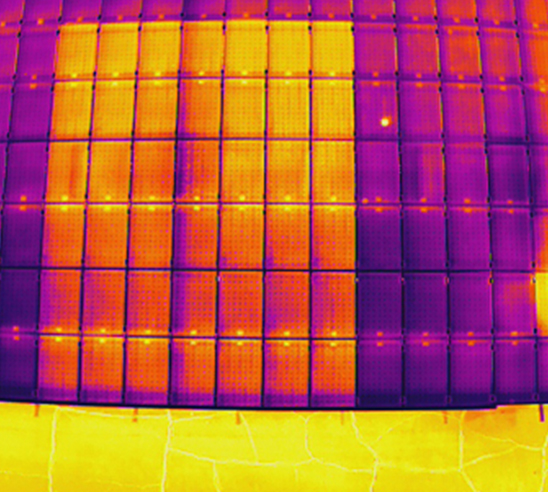
Hot cells and failing strings light up in radiometric thermal — panel-level findings across a whole large-scale array in a single pass.
HOT CELLS · STRINGS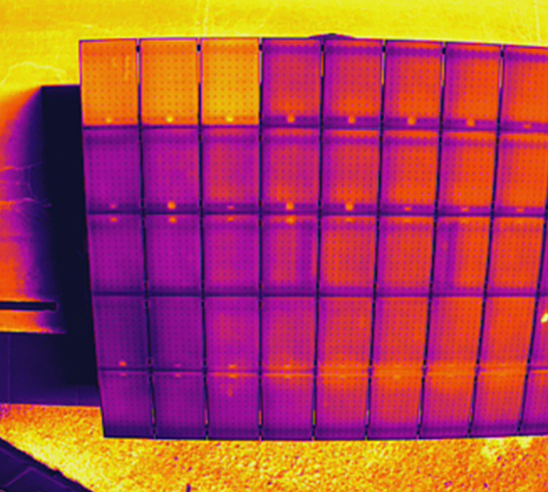
After a Front Range hail event, full-array documentation captures the damage evidence insurers and panel warranties require.
HAIL · INSURANCE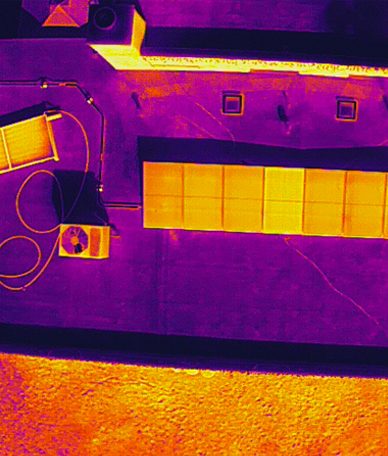
Commissioning scans, warranty documentation, and routine O&M flights for commercial rooftops and ground-mount sites across the metro.
COMMERCIAL · O&MDenver's combination — intense high-altitude sun plus Hail Alley storms — means arrays here earn their inspections. We fly them with radiometric sensors and deliver findings, not just photos.
Minutes in the air, findings you can act on.
Panel count, layout, and what prompted the scan — production drop, hail event, commissioning, or routine O&M.
Radiometric thermal + high-res visual passes over the full array, under irradiance conditions that make anomalies readable.
Every anomaly located by panel position and classified by severity.
Anomaly map, imagery, and findings summary by shared link — ready for your installer or insurer.
Denver's solar economics are great — its weather is brutal. That's the case for inspection.
The Front Range is one of the most hail-prone corridors in North America. Post-storm array documentation supports the claim and catches latent damage early.
Intense UV and irradiance at 5,280 feet work panels hard — and make thermal signatures crisp from the air.
Snow lines, drift shading, and tree growth cost production quietly — a scan quantifies it.
Denver's early solar wave is aging into warranty and O&M territory — routine scans catch failures while they're still claimable.
An array inspection is an electrical diagnostic, not a photo op — radiometric discipline and coverage are what make the findings real.
Solar clients often add these — same flight when it makes sense.
Yes — radiometric thermal shows hot cells, dead strings, and bypass-diode failures as clear temperature signatures, located panel-by-panel across the array.
Yes — post-hail scans capture the thermal and visual evidence insurers and warranty claims need, across the whole system.
No — arrays are inspected live, under load, which is exactly when electrical faults show up in thermal.
Yes — rooftop residential, commercial, and ground-mount, across the Denver metro.
Under good irradiance for electrical faults; after a hail event for damage claims; at commissioning for a warranty baseline.
FAA Part 107 certified and insured with $2M liability coverage, with LAANC pulled for Denver's controlled airspace.
Rated 5.0★ from 271 verified Google reviews across our locations.
John and team are the consummate professionals! Very reliable, quick, and high quality deliverables!
Professional, efficient, and easy to work with. The team delivered clean, high-quality aerials and communicated clearly throughout the project.
Needed work done quickly for drone photography. They responded quickly, knew exactly what was required, and explained it well — great customer service.
John was a professional and very knowledgeable. He made the process of getting drone footage seamless and did an exceptional job.
Absolutely amazing experience with Desert Drones. They did a shoot for my business and made my product really speak for itself!
John is a true professional. Every time we need drone photography or videography done, he is excited to take on the project.
Tell us the system and what prompted the scan — we'll quote the inspection and get you panel-level findings.