
How Phoenix’s Heat Affects Solar Panel Performance
Phoenix leads the nation in solar adoption for good reason. With 299 days of sunshine annually and summer temperatures that routinely hit 115°F and above, the Valley of the Sun is one of the most compelling solar markets in the country. Hundreds of thousands of Phoenix-area homeowners and businesses have installed solar over the past decade. The pitch from installers is usually the same: install once, harvest clean energy for 25 years with minimal maintenance.
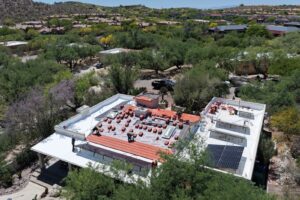
That’s mostly true — but only if your panels are actually working the way they should. Phoenix’s extreme climate is relentless on solar equipment. The same intense heat that makes solar a smart investment also accelerates the kind of degradation that costs you money in lost output. Desert Drones provides FAA-certified drone solar panel inspections throughout Phoenix and the Valley of the Sun, using thermal imaging and high-resolution aerial cameras to find problems that nobody can see from the ground.
What Thermal Stress Does to Phoenix Solar Panels
Most people know that solar panels generate electricity from sunlight — but fewer know that heat actually reduces solar panel efficiency. All solar panels have a temperature coefficient: a rating that describes how much output drops as panel temperature rises above 77°F. In Phoenix, roof-mounted panels regularly reach surface temperatures of 170–185°F on summer afternoons. At those temperatures, most panels are operating 15–25% below their rated capacity just from heat alone.
That’s normal physics. What’s not normal is what happens when defective or damaged panels are added to that equation. A panel with an internal defect generates disproportionate heat even under normal conditions. In Phoenix’s extreme heat, that heat differential becomes more pronounced and the damage accelerates faster than it would in a cooler climate. Manufacturing defects that might degrade slowly over five years in Seattle can cause significant problems within eighteen months in the Valley.
Monsoon season adds another layer of complexity. The July–September monsoon brings haboobs, high winds, heavy rain, and occasional hail. Haboob dust infiltrates panel microinverter vents. High winds test mounting hardware. Hail causes micro-fractures in cells. Heavy rain saturates improperly sealed conduit connections. After a significant monsoon event, your system needs inspection — not just a visual check, but actual thermal documentation of what happened.
What Drone Thermal Imaging Reveals
When our drone flies over your Phoenix solar array with a thermal camera, we’re capturing heat data that tells a detailed story about your system’s health. Every panel in a healthy array should operate at a consistent temperature relative to its neighbors. Panels that deviate significantly — either hotter or cooler — are flagging a problem.
Hot spots indicate internal cell damage, failed bypass diodes, or connection issues. A hot spot in the corner of a panel typically indicates a bypass diode failure — one of the most common panel defects that standard monitoring won’t catch until it gets severe. A hot spot across multiple cells indicates cell cracking or delamination. Resistance in wiring connections causes localized heating that shows up clearly on thermal imaging.
Cold spots — panels that are cooler than their neighbors despite receiving the same sunlight — indicate shading issues, disconnected strings, or panels that have lost the ability to generate current. In a string inverter system, a single failed panel can drag down the entire string. Identifying which panel is the problem requires exactly the kind of systematic thermal survey we provide.
The practical outcome: you know exactly which panels need attention, what the likely problem is, and whether it’s a warranty issue, a maintenance issue, or a safety concern. That’s information you can act on immediately instead of guessing why your monthly bill doesn’t reflect what your solar app says you should be saving.
Phoenix’s Solar Market and Why Inspections Matter Now
The first major wave of residential solar installations in Phoenix happened between 2010 and 2016. That means a significant portion of Valley solar systems are now 10–15 years old. Panel warranties typically cover 25 years of performance, but claims require documentation. If your panels are underperforming at year 12, your ability to file a warranty claim depends on having evidence of the defect — evidence that thermal imaging provides clearly and convincingly.
The Phoenix solar market also went through periods where installation quality varied significantly. Some companies that installed systems in the early growth years cut corners on wiring, mounting, and sealing. We find legacy installation issues regularly during inspections — things that were done slightly wrong at the time and have been slowly degrading for years. Catching these issues now, while equipment is still under warranty or while repair costs are manageable, is far better than waiting for a failure.
Residential Solar Inspections Across the Valley
We work with homeowners across every Phoenix-area community. Scottsdale properties with large rooftops and premium panel installations. Chandler and Gilbert subdivisions with south-facing arrays optimized for Arizona sun. Ahwatukee Foothills homes where steep terrain makes roof access genuinely dangerous. Peoria and Glendale homes on the west side with different soiling patterns from the I-10 and US-60 corridors. Tempe rental properties where landlords need to document system condition for investment protection.
Every one of these properties benefits from the same thing: accurate data about what’s happening on the roof. We give homeowners that data in a clear, professional report that tells them whether their system is performing properly, what needs attention, and what they should do next.
Commercial Solar Inspections in the Phoenix Metro
Commercial solar installations across Phoenix’s industrial and commercial zones represent enormous capital investment. A warehouse with a 500-panel rooftop array that’s losing 10% output to undetected defects is losing thousands of dollars monthly in energy cost and net metering credits. For commercial property owners, regular drone inspection isn’t a maintenance expense — it’s a protection of capital investment that pays for itself in recovered performance.
We provide commercial inspection packages scaled to installation size. Small commercial systems (under 100 panels) are documented in a single session with comprehensive reporting. Larger installations are documented systematically with detailed thermal mapping, annotated anomaly reports, and GPS-referenced panel identification. Everything we produce is suitable for facilities management reporting, lender documentation, and insurance purposes.
After a Haboob or Monsoon: Why Timing Matters
Phoenix has a unique inspection need that other markets don’t: post-haboob and post-monsoon assessment. When a major dust storm rolls through the Valley — especially one that deposits a thick layer of fine particulate across the entire metro — every solar installation in its path is affected. Soiling alone can cut output 15–30% until panels are cleaned. But haboobs also create windborne debris impacts that cause the kind of surface and internal damage that thermal imaging catches before it becomes expensive.
We offer rapid scheduling for post-storm inspections, typically within 24–48 hours of a significant weather event. This timing is critical for insurance documentation — you need evidence of pre-repair conditions to support a claim. Our post-storm reports provide timestamped, comprehensive documentation that insurance carriers accept. We’ve helped Phoenix homeowners and businesses recover the cost of panel replacement and system repair through properly documented claims that might not have been possible without systematic aerial inspection.
Book Your Phoenix Solar Panel Inspection
If you own solar panels in Phoenix or anywhere in the Valley of the Sun, regular drone inspection is one of the most practical things you can do to protect your investment. You’ll know exactly what condition your panels are in, catch problems while they’re still covered by warranty or insurance, and make sure your system is producing every kilowatt-hour it’s capable of in Arizona’s abundant sunshine.
Desert Drones is based in Tucson and serves the entire Arizona market, including Phoenix and the Metro Valley. We’re FAA Part 107 certified, fully insured, and experienced with Arizona’s unique solar inspection environment. Visit our Solar Inspection Services page to learn more and request a quote, or contact us directly to schedule your Phoenix-area inspection. Let’s make sure your solar investment is actually doing what you paid for.