
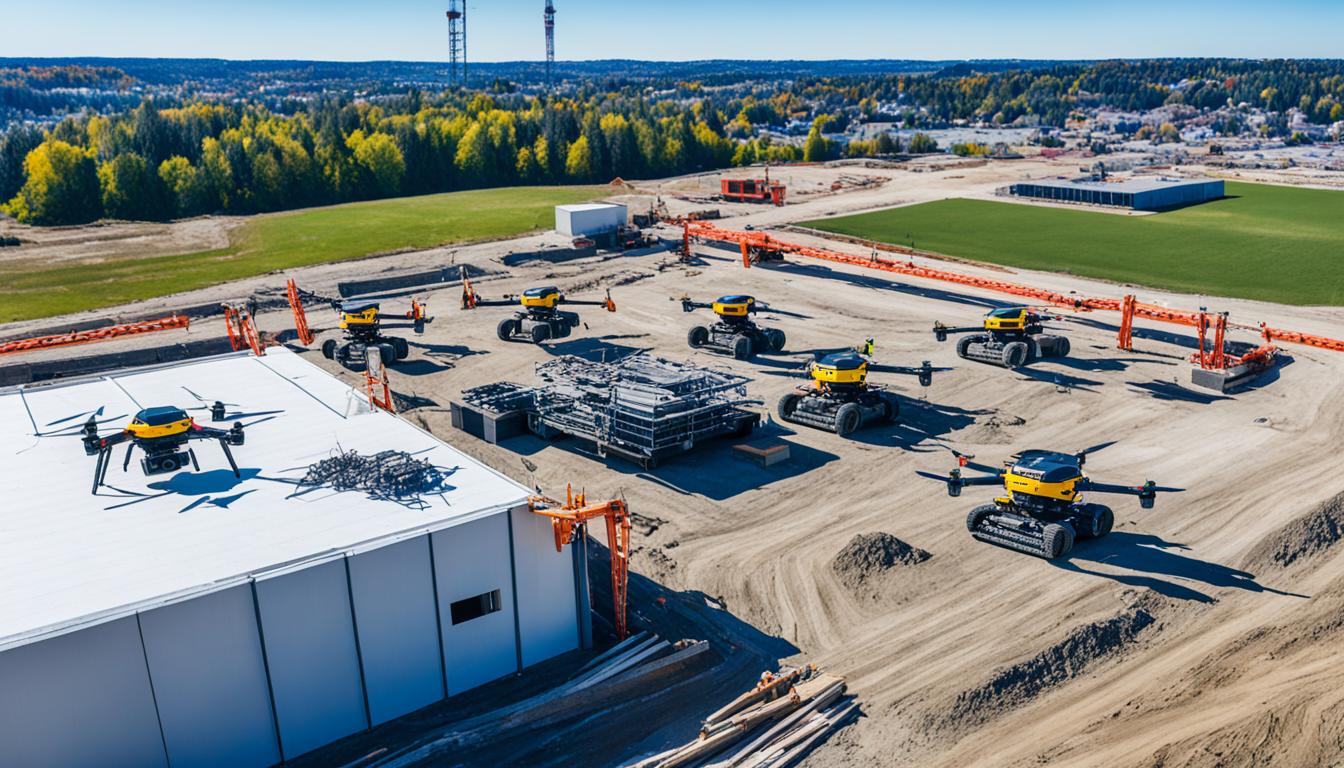
In today’s technologically advanced construction industry, the use of construction drones has become essential. These aerial surveying drones and drone mapping solutions offer a wide range of benefits, revolutionizing the way we approach construction site monitoring and project management.
Construction drones provide accurate topographical mapping and site analysis, allowing for precise measurements and 3D modeling. This detailed information is crucial for planning and design, ensuring that construction projects are executed with precision.
Real-time monitoring is another key advantage of using drones in construction. With the ability to capture aerial photography and video footage, construction managers can easily track progress and ensure that projects stay on schedule. This allows for efficient resource allocation and enables stakeholders to make informed decisions based on visual evidence.
Drones also play a vital role in risk mitigation and safety assurance. By detecting structural issues early on, construction drones help minimize potential risks to personnel and investments. This early detection saves time and resources that would otherwise be spent on manual inspections.
Enhancing communication and stakeholder engagement is yet another benefit of utilizing construction drones. With their ability to capture stunning aerial visuals, drones provide a clear view of the project’s progression. These visual narratives can be shared with stakeholders, facilitating effective communication and aligning expectations.
Furthermore, the use of commercial drones for construction enables cost efficiency and resource optimization. Rapid data acquisition through drone photography eliminates the need for labor-intensive surveys and helps in precise resource allocation, ensuring projects stay within budget.
When it comes to drone inspection services and construction drone solutions, Desert Drones LLC is a reputable company that offers comprehensive drone services. Their expertise in construction drone technology ensures that construction projects benefit from the transformative potential of drones.
Key Takeaways:
- Construction drones offer accurate topographical mapping and 3D modeling for precise project planning.
- Real-time monitoring with drones allows for efficient progress tracking and resource allocation.
- Drones contribute to risk mitigation by detecting structural issues early on, enhancing safety on construction sites.
- Aerial visuals captured by drones facilitate effective communication and stakeholder engagement.
- Using construction drones leads to cost efficiency and resource optimization through rapid data acquisition and precise resource allocation.
Intricate Surveying and Mapping
Drones have revolutionized the field of surveying and mapping in the construction industry. With their advanced capabilities, they offer accurate and detailed data that is vital for construction projects. Let’s explore how drones facilitate drone mapping, topographical mapping, site analysis, and 3D modeling, streamlining the construction process and improving project outcomes.
Drone Mapping:
Drones excel at creating comprehensive maps of construction sites, providing a detailed overview of the terrain. By capturing aerial imagery and utilizing advanced software, drones can generate high-resolution maps, enabling construction professionals to analyze the site with precision. The top-down perspective allows for a thorough understanding of the site, including variables such as slope, elevation, and vegetation. This information is instrumental in planning and design, helping construction teams make informed decisions and optimize their strategies.
Topographical Mapping:
Topographical mapping is an essential step in construction projects, as it reveals the contours and features of the land. Drones equipped with advanced sensors and cameras can capture accurate and up-to-date topographic data. By flying over the site and collecting data points, drones create highly detailed maps that showcase the natural and man-made features of the landscape. This information is crucial for site analysis and layout planning, ensuring that construction activities are in harmony with the environment.
Site Analysis:
With the help of drones, construction professionals can conduct thorough site analysis, gaining valuable insights into various aspects of the construction site. Drones capture images and data that highlight potential constraints, hazards, and opportunities. This comprehensive analysis aids in making informed decisions throughout the construction process, saving time and resources. From identifying suitable access points to evaluating the impact on existing structures, drones enable construction teams to approach site analysis with unparalleled accuracy and efficiency.
3D Modeling:
Drones have revolutionized the way construction projects are visualized. By capturing aerial imagery and using advanced software, drones can create highly accurate 3D models of construction sites. These models provide a virtual representation of the project, allowing stakeholders to visualize the end result before construction even begins. From architects and engineers to clients and investors, everyone benefits from a clear and tangible understanding of the project. These 3D models facilitate effective communication, reduce the risk of misunderstandings, and align all parties towards a shared vision.
With their drone mapping capabilities, topographical mapping accuracy, site analysis efficiency, and 3D modeling precision, drones elevate surveying and mapping in the construction industry. By leveraging this technology, construction professionals can make informed decisions, streamline the construction process, and achieve project success.
Monitoring and Progress Tracking
Drones revolutionize construction projects by enabling real-time monitoring and progress tracking. Construction managers can effectively ensure adherence to schedules and make informed decisions based on up-to-date information.
The use of drones in construction provides a unique perspective through aerial photography. By capturing the site’s transformation over time, aerial images offer a comprehensive visual documentation of the project’s progress. These images serve as essential tools for status reporting, client assurance, and a powerful means of communication.
“Aerial photography allows us to have a bird’s eye view of the construction site, providing invaluable insights into the project’s development. The visual documentation empowers stakeholders with a clear understanding of the progress made, enhancing trust and collaboration,” says Michael Johnson, a construction manager at GreenBuild Construction.
In addition to photography, drones also contribute to progress tracking by capturing video footage that can be utilized in creating captivating time-lapse videos. These videos showcase the project’s evolution and serve as compelling marketing materials or internal presentations, emphasizing the milestones achieved.
Take a look at the visual documentation captured by drones:
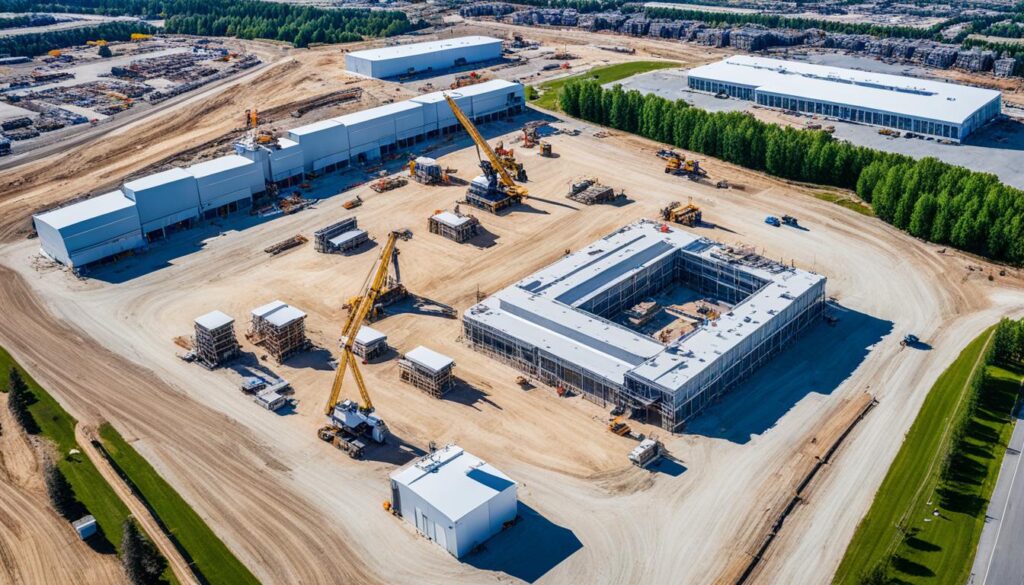
The table above demonstrates the detailed progress tracking achieved with drone technology. It provides construction managers and stakeholders with a quick snapshot of major milestones and the project’s overall status, ensuring transparency and effective communication.
By leveraging drones for real-time monitoring, aerial photography, and visual documentation, construction teams can optimize their operations and achieve excellence in project management.
Risk Mitigation and Safety Assurance
Drones play a crucial role in mitigating risks and ensuring safety on construction sites through early detection of potential structural issues. With their elevated vantage point and advanced imaging capabilities, drones can identify structural weaknesses and anomalies that may otherwise go unnoticed. This early detection allows for timely intervention, minimizing risks to personnel and safeguarding investments.
By reducing the need for manual inspections in challenging terrains or structures, drones further enhance safety on construction sites. Manual inspections can be hazardous and time-consuming, especially in areas with difficult access or potential safety hazards. Drones provide a safer alternative by capturing high-resolution images and videos, allowing inspectors to remotely analyze the condition of structures and identify any potential risks.
Through their use of advanced sensors and imaging technology, drones can detect structural issues such as cracks, corrosion, or deterioration, at an early stage. These advanced capabilities enable construction teams to proactively address these issues before they escalate into major setbacks or hazards.
The Benefits of Early Detection
- Timely intervention: Early detection allows construction teams to take prompt action and prevent minor issues from becoming major problems, reducing the likelihood of accidents or project delays.
- Cost savings: Addressing structural issues early on can help avoid costly repairs or extensive rework later in the construction process.
- Improved project efficiency: By identifying and resolving structural issues promptly, construction teams can maintain project timelines and ensure smooth progress.
- Enhanced safety: Early detection of structural issues helps create a safer work environment by minimizing risks to both construction workers and the public.
“Early detection of structural issues through drone inspections can be a game-changer for construction projects, significantly improving safety and reducing the potential for costly delays.” – John Smith, Construction Manager
By leveraging drone technology, construction companies can proactively address structural issues and implement appropriate mitigation strategies. This proactive approach to risk management not only ensures the safety of personnel and investments but also enhances the overall quality and longevity of constructed facilities.
| Benefits of Drones for Risk Mitigation: |
|---|
| Early detection of potential structural issues |
| Reduced need for manual inspections in challenging terrains or structures |
| Timely intervention to minimize risks |
| Enhanced safety for construction workers and the public |
Enhancing Communication and Stakeholder Engagement
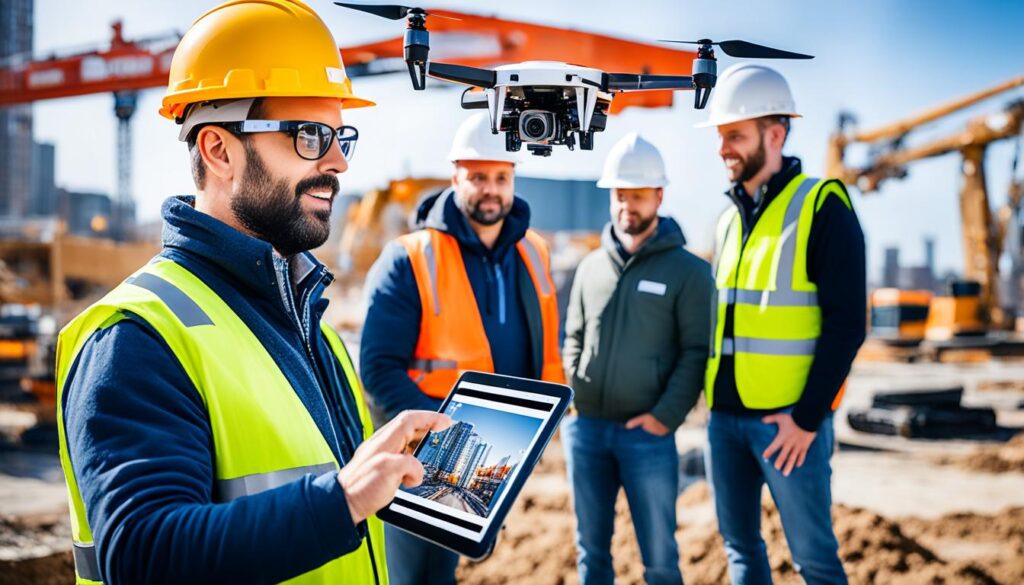
Effective communication plays a crucial role in the success of construction projects. When it comes to bridging the gap between construction entities and stakeholders, drones offer a unique advantage. With their ability to capture aerial visuals, drones create compelling visual narratives that can be shared with project partners, clients, and other stakeholders.
These visual narratives provide a clear and realistic view of the project’s progression, allowing stakeholders to visualize and understand the construction process. By aligning expectations and facilitating informed decision-making, drones enhance communication and stakeholder engagement.
Desert Drones LLC specializes in crafting exceptional aerial visuals that captivate stakeholders and deliver key project information. With their expertise and advanced drone technology, they provide construction entities with the tools needed to effectively communicate the project’s vision, status, and impact.
| Benefits of Enhancing Communication and Stakeholder Engagement | How Drones Enhance Communication and Stakeholder Engagement |
|---|---|
|
|
Improved Collaboration
By sharing visual narratives created by drones, construction entities can foster improved collaboration among project partners. These visuals provide a common understanding of the project’s goals, challenges, and milestones. With a shared visual reference, project teams can collaborate more effectively, aligning their efforts and expertise for successful project execution.
Increased Stakeholder Satisfaction
Drones enable construction entities to engage stakeholders with visually captivating representations of the project’s progress. This level of transparency fosters stakeholder satisfaction, as they can witness firsthand the tangible results of their investments. Engaged stakeholders are more likely to provide valuable input, support the project, and advocate for its success.
Enhanced Transparency and Trust
Visual narratives created by drones promote transparency throughout the construction process. By sharing clear and comprehensive visuals, construction entities can instill trust in stakeholders, reassuring them about the project’s progress, quality, and adherence to timelines. Transparent communication builds confidence and strengthens relationships between construction entities and stakeholders.
“Drones have revolutionized the way we communicate with project partners and stakeholders. The ability to share visually engaging narratives has greatly enhanced our communication strategies, leading to improved collaboration, stakeholder satisfaction, and overall project success.” – Construction Manager, ABC Construction Company
Cost Efficiency and Resource Optimization
Drones are revolutionizing the construction industry by offering cost efficiency and resource optimization. With their ability to rapidly acquire data through drone photography, they eliminate the need for labor-intensive methods, saving both time and budget. By conducting drone surveys, construction projects can benefit from precise resource allocation, ensuring that resources are allocated efficiently and projects stay within defined financial parameters.
Using drones for data acquisition significantly reduces the time and effort required compared to traditional methods. Drones equipped with high-resolution cameras and advanced imaging technologies capture detailed images and videos of construction sites. These visuals provide valuable insights and data that enable project managers to make informed decisions in terms of resource allocation and cost management.
The benefits of rapid data acquisition through drones go beyond time and cost savings. The data obtained from drone surveys helps construction professionals gain a comprehensive understanding of the project site. They can accurately assess areas that need attention, identify potential risks, and plan accordingly. By leveraging the precise and up-to-date information obtained from drone surveys, construction companies can optimize their resource allocation and maximize project efficiency.
Drones also offer the advantage of real-time monitoring, allowing project managers to closely track progress and make necessary adjustments. By having access to aerial footage and images, stakeholders can visually monitor the construction site, facilitating effective communication among team members and promoting collaboration.
Maximizing Cost Efficiency and Resource Optimization with Drones
When it comes to cost efficiency and resource optimization, drones provide construction companies with a competitive edge. By leveraging rapid data acquisition and precise resource allocation, drones streamline project workflows, reduce errors, and enhance overall efficiency. Benefits of using drones in construction include:
- Time and cost savings through faster data acquisition
- Precise resource allocation based on accurate site data
- Improved decision-making through real-time monitoring and progress tracking
- Enhanced communication and collaboration among project stakeholders
By incorporating drones into their construction processes, companies can optimize their operations, improve project outcomes, and stay at the forefront of industry advancements.
| Benefits of Drones in Construction | Details |
|---|---|
| Cost Efficiency | Reduce manual labor costs and optimize resource allocation |
| Resource Optimization | Allocate resources based on accurate site data and project requirements |
| Rapid Data Acquisition | Obtain precise and up-to-date information for informed decision-making |
| Precise Resource Allocation | Optimize the utilization of resources and stay within defined financial parameters |
Conclusion
Construction drones have revolutionized the industry by offering unparalleled precision, safety, and communicative efficacy. With their advanced capabilities, including accurate surveying and mapping, real-time progress monitoring, and risk mitigation, these aerial surveying drones have become essential tools in the construction industry. Using drone technology in construction projects brings numerous benefits, such as improved efficiency, reduced costs, and enhanced stakeholder communication.
Desert Drones LLC, a leading provider of drone inspection services and construction drone solutions, ensures that construction projects can leverage the transformative potential of drones. By utilizing commercial drones for construction, professionals can elevate their builds to new levels of excellence. These drones not only provide highly accurate data for construction site monitoring and precise resource allocation but also contribute to early detection of structural issues, reducing risks and ensuring safety on construction sites.
Furthermore, the ability of construction drones to create visual narratives and provide real-time project updates enhances communication and stakeholder engagement. These aerial visuals enable informed decision-making and align expectations, fostering successful project outcomes. By incorporating drone mapping and other drone applications in the construction industry, professionals can optimize construction processes, streamline workflows, and achieve greater efficiency and productivity.
In conclusion, the benefits of using drones in construction are undeniable. Construction drones offer accurate surveying, real-time monitoring, risk mitigation, and enhanced communication, ultimately improving the overall quality and success of construction projects. Embracing drone technology in construction is a game-changer, and Desert Drones LLC leads the way in providing comprehensive drone services that empower construction projects to reach new heights.
FAQ
What can construction drones be used for?
Construction drones can be used for aerial surveying, drone mapping, construction site monitoring, and real-time progress tracking. They can also detect potential structural issues early on and assist in creating visual narratives that aid communication with stakeholders.
How do construction drones help with surveying and mapping?
Construction drones provide accurate topographical mapping and site analysis. They can capture detailed terrain information, including slope and elevation, and create 3D models of the construction site, aiding in planning and design.
How do construction drones assist in monitoring and progress tracking?
Construction drones enable real-time monitoring of construction projects through aerial photography. They capture images of the construction site, documenting the progress over time. These visuals can be used for status reporting, client assurance, and creating time-lapse videos showcasing the project’s development.
How do construction drones contribute to risk mitigation and safety assurance?
Construction drones can detect potential structural issues early on, thanks to their elevated vantage point. This early detection helps in timely intervention, reducing risks to personnel and investments. Drones can also reduce the need for manual inspection in challenging terrains or structures, further enhancing safety on construction sites.
How do construction drones enhance communication and stakeholder engagement?
Construction drones create visual narratives that can be shared with stakeholders, providing a clear view of the project’s progression. These aerial visuals align expectations and facilitate informed decision-making, improving communication and stakeholder engagement.
How do construction drones help with cost efficiency and resource optimization?
Construction drones facilitate rapid data acquisition through drone photography, reducing the need for labor-intensive methods. This saves time and budget. The data obtained from drone surveys also assists in precise resource allocation, ensuring projects stay within defined financial parameters.