
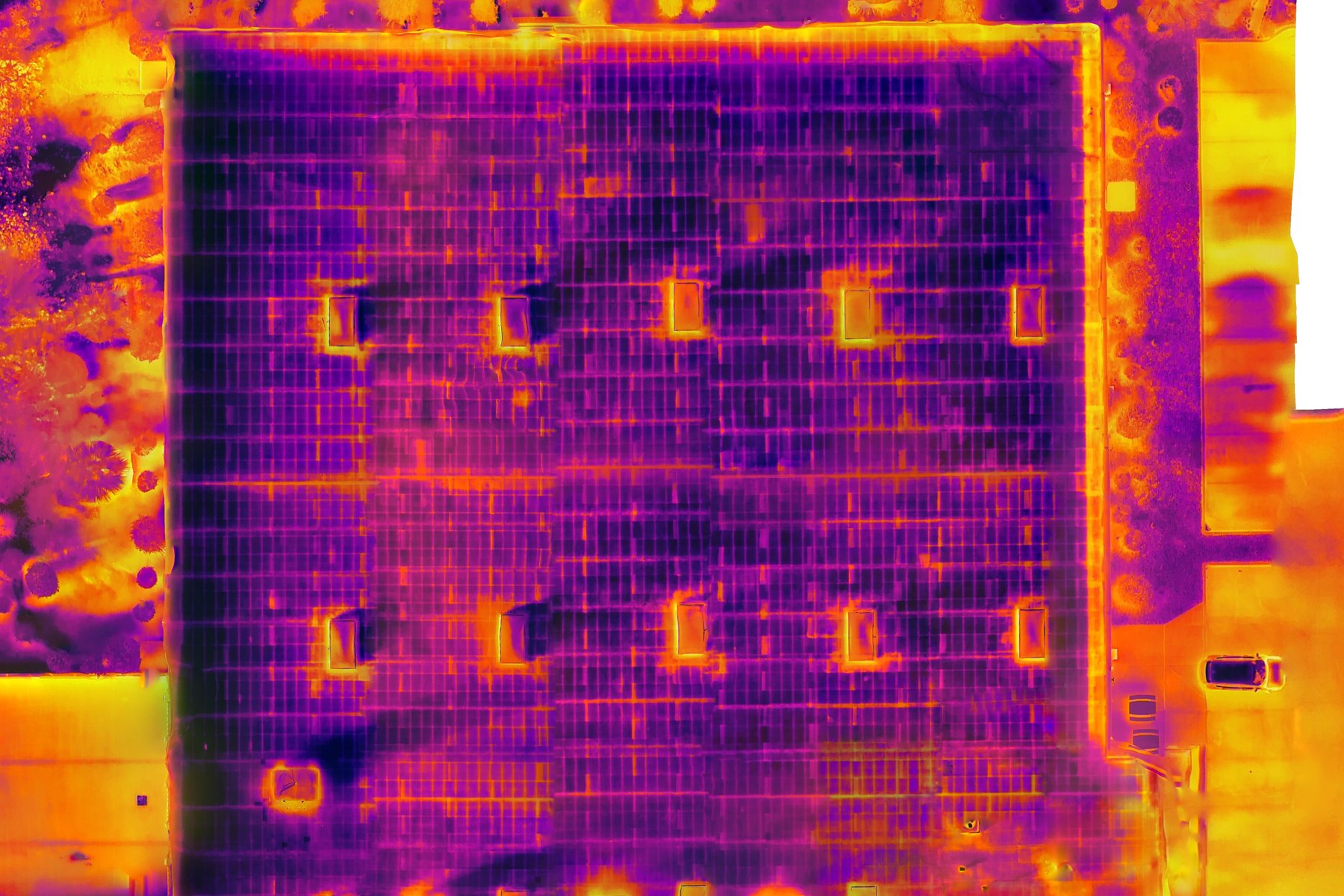
Albuquerque sits more than 5,000 feet above sea level, and once November arrives, clear desert nights can drop well below freezing even after a sunny afternoon. That’s tough on heating bills, but it’s ideal for one thing: finding out where a building is losing heat. A heat loss drone inspection in Albuquerque uses a thermal camera to show warm air escaping through roofs, walls, windows, and rooftop equipment.
With a big gap between indoor and outdoor temperatures, gaps in insulation and air leaks stand out clearly on the thermal image. For schools, churches, office buildings, warehouses, and apartment complexes from Downtown to Rio Rancho, that information points straight to the repairs that make the biggest difference. Desert Drones LLC provides FAA Part 107 certified heat loss drone inspections in Albuquerque, giving building owners a clear look at where their heating dollars are going before the coldest part of winter sets in.
Why Albuquerque Winters Are Ideal for a Heat Loss Drone Inspection
Thermal imaging depends on temperature differences. The bigger the difference between inside and outside, the easier it is to see where heat is getting out. Albuquerque’s high desert climate creates those conditions on a lot of winter nights.
Cold, clear nights
Dry air and clear skies let the ground and buildings lose heat quickly after sunset. When a building is heated to 68 degrees inside and the outside air is near freezing, missing insulation and air leaks show up as bright warm areas on an otherwise cool roof or wall. Clear skies also mean fewer clouds reflecting heat back down, which helps readings stay consistent.
Flat roofs and parapets
Albuquerque has a lot of flat-roofed buildings, from Pueblo Revival and Territorial-style designs to mid-century commercial buildings along Central Avenue and in Uptown. Flat roofs with parapet walls often have insulation gaps along the edges, around scuppers, and near rooftop units. Those details are hard to inspect from the ground and slow to inspect on foot, but they’re easy to scan from above.
Older stucco and block buildings
Many buildings in neighborhoods like Nob Hill, Barelas, the North Valley, and Downtown were built long before modern energy codes. Some have been renovated in stages, with new additions next to older sections. Thermal imaging shows where those older walls and roof areas are losing heat, which helps owners decide where to spend their improvement budget.
Freeze risk and hidden moisture
When warm, moist air leaks into a cold roof or wall cavity, it can condense and even freeze. Over time that can damage insulation and roof decks. Thermal scans in winter can show areas where heat and moisture are collecting, which gives your roofer or contractor a head start on fixing them.
Airspace to keep in mind
The Sunport and Kirtland Air Force Base sit side by side on the south side of town, and Double Eagle II Airport is out on the West Mesa. Many properties fall under controlled or restricted airspace, so we check every location and request FAA authorization where needed.
What Heat Loss Looks Like on a Thermal Image
If you’ve never seen a thermal image before, it can look a little abstract at first. Here’s how to read the most common patterns.
Bright edges and corners
Warm streaks along roof edges, parapets, and wall corners usually point to gaps in insulation or air leaking through joints. These are common in older Albuquerque buildings where additions meet the original structure.
Warm patches on the roof
A warm, irregular patch in the middle of a flat roof can mean missing or compressed insulation, or insulation that has gotten wet. Your roofer can check which one it is with a moisture meter or a small core sample.
Hot spots around equipment and openings
Rooftop units, skylights, roof hatches, and plumbing vents often show warm rings around their bases. That usually means heat is escaping through poorly sealed curbs or flashing, which is often a fairly simple fix.
How a Winter Thermal Inspection Works
Here’s what a typical heat loss inspection looks like, from the first call to your final report.
Set the goal
We start by talking about the building and what you’re hoping to learn. Maybe heating bills jumped, certain rooms never warm up, or you’re planning an energy upgrade and want a starting point. That helps us decide whether to focus on the roof, the walls, or both.
Prepare the building
For the best results, the building should be heated normally for several hours before the scan. We’ll ask you to keep doors and windows closed and the heat on at its usual setting. That creates a steady temperature difference for the camera to read.
Fly after dark
We usually fly after sunset or before sunrise, when the sun isn’t warming exterior surfaces. That way, the warm areas on the thermal image come from heat inside the building, not from sunlight. The drone captures thermal images of the roof and exterior walls, along with matching color photos for reference.
Review and mark findings
We go through the imagery and mark areas that show heat loss or possible moisture. Each finding includes a thermal image, a matching photo, and a note about where it is on the building.
Deliver a clear report
You get an organized report you can share with your contractor, roofer, or energy consultant. They use it to plan insulation upgrades, air sealing, roof repairs, or HVAC work.
Who Books a Heat Loss Drone Inspection in Albuquerque
Schools and churches. Large, older buildings with big rooms and high ceilings can be expensive to heat. A thermal scan helps facilities committees see where to start.
Property managers and HOAs. Apartment complexes and townhome communities across the Westside and Northeast Heights can use thermal data to find problem units and plan maintenance.
Commercial building owners. Office and retail buildings in Uptown, Journal Center, and along I-25 benefit from knowing where heat is escaping before committing to a large energy project.
Roofing and insulation contractors. Thermal images show clients exactly why work is needed and help contractors target their bids.
Restaurants and small businesses. Older storefronts along Central and in Old Town can lose a surprising amount of heat through roofs and transoms. A scan helps owners see where small fixes could make the space more comfortable.
Energy consultants. A drone scan gives consultants a full-roof view to pair with their on-site audits.
Making the Most of Your Results
A thermal report is most useful when it turns into a plan. Start with the largest and brightest areas, since those usually represent the biggest heat losses. Share the report with your contractor and ask which fixes give the most benefit for the cost.
Some improvements, like sealing around rooftop units or adding weatherstripping, can happen right away. Others, like adding roof insulation, may fit better with a future roof replacement. Keeping the report on file also gives you a baseline, so a follow-up scan next winter can show whether the repairs worked.
Why Desert Drones
Start with the basics: we’re FAA Part 107 certified. That’s the federal requirement for flying drones commercially, and it’s how we get permission to operate near the Sunport, Kirtland, and Double Eagle II.
We work across New Mexico and the Southwest, and our local pilots understand Albuquerque’s altitude, cold nights, and spring winds. We schedule flights for the conditions that give the most reliable thermal readings.
We keep turnaround fast and deliver professional, easy-to-read reports. Every thermal image comes with a matching photo so nothing gets lost in translation.
We also keep it honest. We capture and present the imagery, and your contractor or energy professional makes the final recommendations. Learn more on our thermal camera drone services page or our Albuquerque thermal drone services page.
Albuquerque Heat Loss Inspection FAQ
When is the best time to schedule a heat loss drone inspection in Albuquerque?
Late fall through early spring works best, on clear nights when it’s much colder outside than inside. December through February usually gives the strongest contrast.
Do you need to go inside the building?
No. The drone scans the roof and exterior from the air. We just need the building heated normally and access to a safe launch spot.
Can wind affect the results?
Yes. Strong wind cools surfaces quickly and can hide heat loss. We watch the forecast and pick calm nights for the most accurate readings.
Can you scan homes as well as commercial buildings?
Yes. Homeowners in the Northeast Heights, Corrales, and the East Mountains use heat loss scans to find drafty spots and plan insulation upgrades. The process is the same, just on a smaller scale.
Will this show me how much I’ll save on heating?
Thermal imaging shows where heat is escaping, not exact dollar amounts. An energy consultant or contractor can use the findings to estimate savings for specific upgrades.
Schedule Your Albuquerque Heat Loss Inspection
Ready to see where your building is losing heat this winter? Contact Desert Drones LLC for a free quote on a heat loss drone inspection in Albuquerque. We serve Albuquerque, Rio Rancho, Bernalillo, Los Lunas, and surrounding areas with FAA-certified pilots who know New Mexico’s high desert.