
Drive west on I-10 past 51st Avenue, or north along the Loop 101 near Deer Valley, and you’ll see mile after mile of warehouse and industrial roofs. Those big white boxes hold a lot of what keeps the Valley running, and the roofs over them take a beating. Months of extreme heat, ultraviolet exposure, and sudden monsoon downpours can open seams and push water under the membrane, and on a roof that size, a small leak can travel a long way before anyone notices a stain on the ceiling.
A thermal drone inspection in Phoenix gives building owners and facility teams a fast, complete look at what’s happening under the surface. Desert Drones LLC provides FAA Part 107 certified thermal drone inspections in Phoenix for warehouses, distribution centers, manufacturing plants, and other large commercial roofs, so you can find trouble spots before they turn into ruined inventory or a full tear-off.
Why Phoenix Warehouses Need Thermal Drone Inspections
Phoenix roofs work in conditions most of the country never sees. That puts them on a different maintenance clock, and it changes how and when thermal imaging should be done.
Heat that never really lets up
Summer days in Phoenix regularly run well past 100 degrees, and dark or aging roof surfaces get much hotter than the air. That kind of heat dries out sealants, makes membranes brittle, and puts constant stress on seams and flashing. Even white reflective roofs wear down over time, especially around rooftop equipment where crews walk and work.
Monsoon season tests every seam
From roughly mid-June through September, monsoon storms can drop a lot of rain in a short time, often with strong winds and blowing dust. Water that finds a weak seam or a clogged drain can soak into roof insulation and spread across a large area. Because warehouse ceilings are high and often open, building staff may not see a problem until it reaches racking, product, or electrical equipment.
Huge footprints, tight schedules
Distribution centers in the Southwest Valley and around Sky Harbor are often several hundred thousand square feet. Walking every section of a roof that size with a handheld camera takes time, and many facilities run around the clock with trucks moving in and out. A drone covers the roof from above without disrupting operations below.
Dust and debris
Haboobs and monsoon winds leave dust, leaves, and debris across Valley rooftops. That material collects around drains and scuppers and can slow drainage after the next storm. Standing water sitting on a roof for days puts extra stress on seams and is a common starting point for moisture problems underneath.
Rooftop equipment and solar
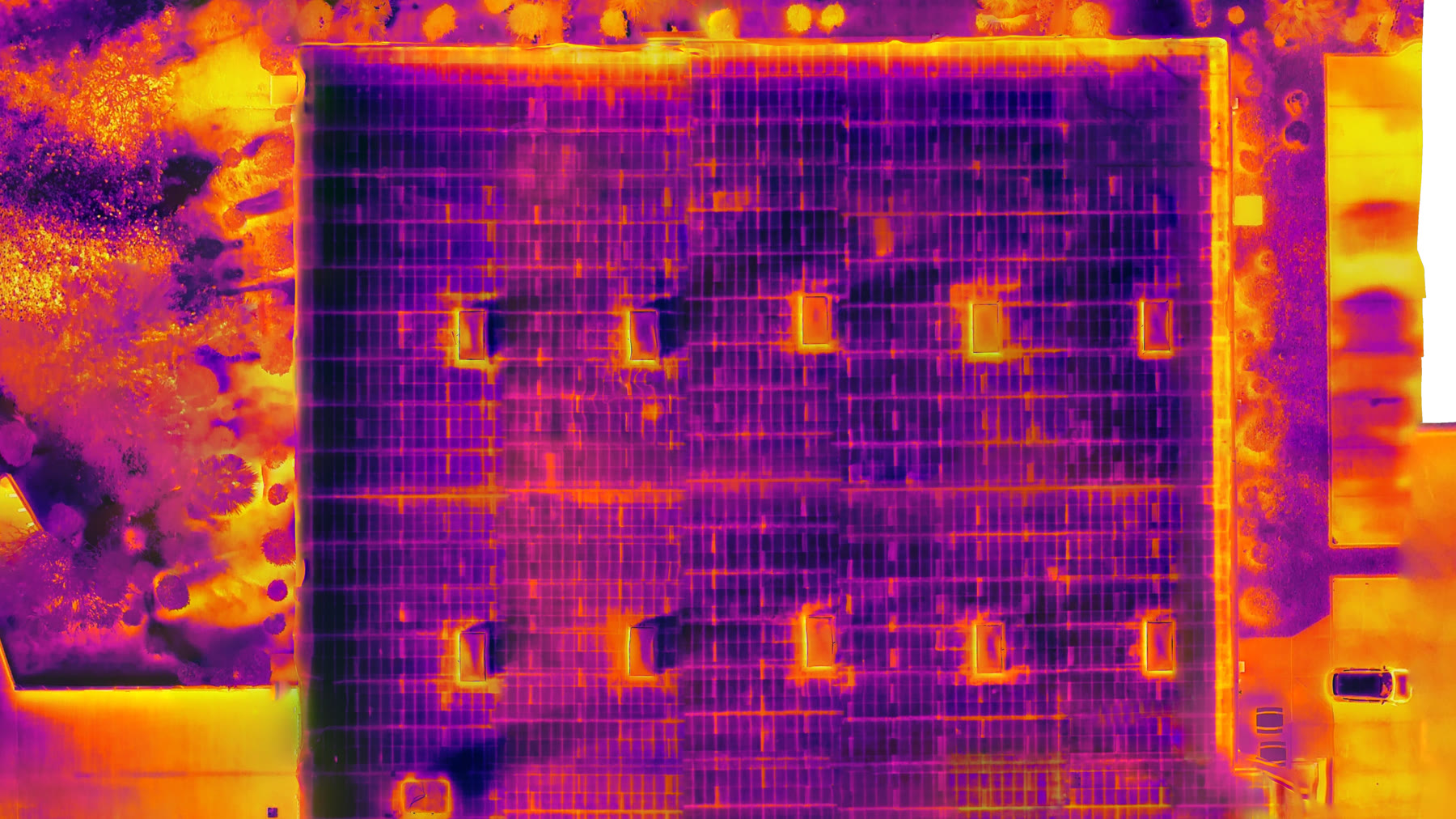
Large industrial roofs carry a lot of equipment: rooftop HVAC units, exhaust fans, skylights, and more and more solar arrays. Each penetration is a possible leak point. Thermal imaging can also show solar panels or electrical components running hotter than the ones next to them, which helps maintenance teams decide where to look first.
How a Thermal Drone Inspection in Phoenix Is Done
Timing matters more in Phoenix than almost anywhere else. Here’s how we plan and run a typical warehouse roof scan.
Picking the right window
Thermal moisture scans work by catching the difference between wet and dry roof areas as the roof cools down after a sunny day. Wet insulation holds heat longer, so it shows up warmer in the evening.
In Phoenix, summer nights can stay so warm that the roof barely cools, which makes those differences harder to read. Spring and fall evenings, and clear winter evenings, usually give the clearest results. We’ll talk through timing with you and recommend the best window for your building.
Airspace and site coordination
The Valley has a lot of controlled airspace, from Sky Harbor to Deer Valley, Glendale, Goodyear, and Luke Air Force Base out west. We check your site and request FAA authorization when it’s needed. We also coordinate with your facility contact on where to launch and how to stay clear of truck traffic and yard operations.
Flying the scan
The drone flies a planned grid over the roof, capturing thermal images along with matching color photos. The color images help pinpoint each thermal reading against real features like drains, curbs, patches, or seams.
Building the deliverables
We stitch the imagery into an overview of the full roof and flag areas that show possible moisture or heat loss. Each flagged area includes a close-up thermal image and a matching color photo, so your roofer can walk right to it.
Next steps for your team
Thermal imaging shows where to look. Your roofing contractor confirms the findings with a moisture meter or core cuts and builds a repair plan. Many owners use the results to decide between spot repairs, a roof coating, or a replacement.
A Simple Seasonal Plan for Phoenix Roofs
Many facility teams find it helpful to tie thermal scans to the calendar instead of waiting for a leak.
Spring: before the heat and storms
A spring scan gives you a clear picture of the roof before summer. Any wet areas found in March or April can be repaired while temperatures are still comfortable for roofing crews, and drains can be cleared before the first monsoon storm.
Fall: after monsoon season
A fall scan, once nights start cooling in October or November, shows whether the summer storms pushed water into the roof. Comparing it with the spring images makes new problem areas easy to spot.
Before buying, leasing, or re-roofing
Any time a roof decision is on the table, a current thermal scan adds useful information. It can help decide whether a section can be repaired or coated, or whether it’s time for a full replacement.
Who Uses Thermal Drone Inspections in Phoenix
Warehouse and industrial property owners. Knowing the condition of a large roof helps owners plan capital budgets and protect their tenants. A thermal baseline also gives you something to compare against after future storms.
Facility and maintenance managers. Regular scans before and after monsoon season make it easier to schedule repairs during slower months instead of reacting to leaks in August.
Roofing contractors. A thermal map helps roofers write accurate proposals and show clients exactly why certain areas need attention.
Commercial real estate brokers and buyers. When an industrial building changes hands, roof condition is one of the big unknowns. A thermal scan adds useful information to the due diligence file.
Solar installers and O&M teams. Rooftop solar on warehouses is common across the Valley. Thermal imaging helps narrow down which panels or strings need a closer look.
Why Desert Drones
Every Desert Drones pilot holds an FAA Part 107 certificate, the federal credential for flying drones for hire. That certificate also allows us to request authorization to fly in the controlled airspace that covers much of metro Phoenix.
We’re a Southwest company with local pilots who know Arizona heat and monsoon patterns firsthand. We plan flights around the conditions that actually produce good thermal data here, rather than just showing up on a hot afternoon.
We turn projects around quickly and deliver professional, organized results: an overview of the roof, flagged areas, and paired thermal and color images. Your team gets something it can act on right away.
We also stay in our lane. We capture and present the imagery clearly, and your roofing contractor or engineer makes the repair decisions. To learn more, visit our thermal camera drone services page or our Phoenix thermal drone services page.
Phoenix Thermal Drone FAQ
Can you do a thermal roof scan in the middle of summer?
It’s possible, but not always ideal. Warm summer nights can reduce the temperature difference between wet and dry areas. For moisture surveys, we usually recommend spring, fall, or clear winter evenings. If you have an urgent problem in summer, we’ll still help and explain any limits on the results.
Do you need to shut down operations during the flight?
No. The drone flies over the roof, and we coordinate with your team on a launch spot away from trucks and workers. Most facilities keep running as usual.
How often should a warehouse roof be scanned?
Many owners like a baseline scan and then a follow-up after a heavy monsoon season or before planning major roof work. Your roofer can help you decide what makes sense for your building.
Can you scan the solar array on our roof at the same time?
Often, yes. The best conditions for solar thermal imaging are different from roof moisture scans, since panels need to be producing power in strong sunlight. We’ll talk through whether one visit or two makes more sense for your building.
Will the scan show exactly where the leak is?
The scan shows where wet insulation is likely sitting, which usually points toward the source. Your roofer confirms the exact entry point during the repair.
Schedule a Phoenix Thermal Inspection
Want to know what your warehouse roof is hiding before the next monsoon? Contact Desert Drones LLC for a free quote on a thermal drone inspection in Phoenix. We serve Phoenix, Glendale, Tolleson, Goodyear, and the rest of the Valley with FAA-certified pilots who know Arizona’s heat and storms.