
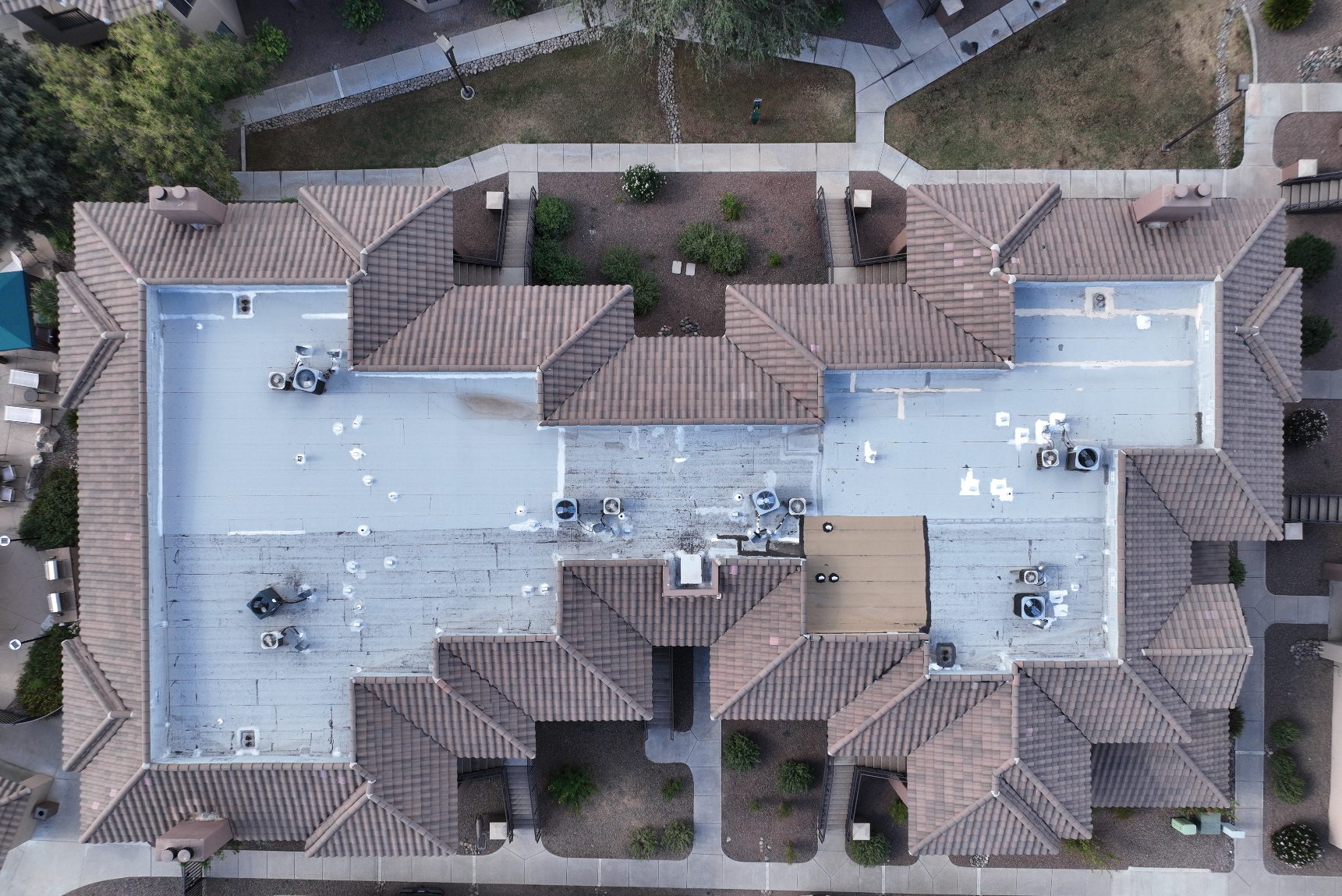
Drive through almost any older Mesa neighborhood and look up. You’ll see a lot of flat roofs, many of them coated in spray foam, sitting behind short parapet walls where nobody can see them from the street. That design handles the heat well, but it also hides problems. Water can get under a foam roof through a small crack or a clogged drain and sit there for months before a stain shows up on a ceiling.
A thermal drone inspection in Mesa, AZ helps find that trapped moisture before it turns into rotted decking or a mold problem. Wet areas hold heat differently than dry ones, and an infrared camera can see that difference from the air in a single flight.
Desert Drones LLC provides FAA Part 107 certified thermal drone inspections for Mesa homeowners, HOAs, property managers, and roofing contractors, with clear infrared and visual images you can act on.
Why Mesa Roofs Benefit From Thermal Imaging
Mesa grew fast from the 1970s through the 1990s, and a lot of the homes, townhomes, and commercial buildings from that era were built with low-slope roofs. Spray polyurethane foam became a popular choice here because it insulates well and can be recoated instead of torn off. Many of those roofs are now on their second or third coating.
The problem with foam and flat roofs
Foam roofs fail quietly. The protective coating wears thin under years of intense sun, then small cracks, bird pecks, or blisters let water in. Because the foam is a closed-cell material, water often spreads sideways under the surface instead of dripping straight through. By the time a leak appears inside, the wet area on the roof can be much larger than the spot on the ceiling.
Flat roofs with built-up or modified bitumen membranes have the same issue. Water finds a seam near a parapet or an HVAC curb and travels along the insulation. Walking the roof and looking for soft spots works, but it’s slow and easy to miss areas.
Monsoon storms make it urgent
Mesa’s monsoon season brings heavy, fast rain and strong wind gusts between roughly July and September. Drains and scuppers clog with debris, water ponds on low spots, and wind can lift edges or damage coatings. Fall is a smart time to check the roof, after the storms have passed and before winter rains arrive.
Neighborhoods across Mesa, from Dobson Ranch on the west side to the 55+ communities and manufactured home parks in east Mesa, have a lot of roofs that fit this profile. Commercial strips along Main Street, Southern Avenue, and the industrial areas around Falcon Field Airport add even more flat roof square footage.
Signs your roof is ready for a thermal scan
Some warning signs are easy to spot from inside the house. Water stains on the ceiling, a musty smell in one room, or paint bubbling near the top of a wall can all point to a roof leak. Higher cooling bills can also be a clue, since wet insulation doesn’t do its job as well.
Other signs show up on the roof itself. Foam that looks chalky, cracked, or pitted, coatings that have worn down to the bare foam, and spots where water ponds for days after a storm are all worth a closer look. If your roof hasn’t been recoated in many years, that alone is a good reason to check.
A thermal drone inspection in Mesa, AZ is also useful before a recoat. Coating over wet foam traps the moisture underneath, so knowing where the wet areas are first helps your roofer cut out and replace the damaged sections before applying a new coat.
How a Thermal Drone Inspection in Mesa, AZ Works
The process is simple from your side. Most of the work is in the timing and the follow-up.
1. Timing the flight
Thermal roof inspections work best in the evening after a sunny day. During the day, the sun heats the whole roof. After sunset, dry areas cool off quickly while wet areas hold heat longer, so moisture shows up as warmer patches on the thermal image. In Mesa, that window is easy to hit most of the year, though we avoid flying right after rain, when the whole roof surface is still wet.
2. Airspace check and site setup
Parts of Mesa sit near Falcon Field and Phoenix-Mesa Gateway Airport, both of which have controlled airspace. We check the location ahead of time and request FAA authorization if needed. On site, we pick a safe launch spot and confirm access with the owner or property manager.
3. Capturing thermal and visual images
The drone flies a planned pattern over the roof, capturing infrared images alongside regular photos of the same areas. Pairing the two matters. A warm spot on the thermal image might be wet insulation, or it might be an HVAC unit, a vent, or a patch of darker coating. The visual photo helps tell them apart.
4. Reviewing the results
After the flight, we review the images and mark suspect areas on a roof map. You get annotated thermal and visual images that show where the possible moisture is and how big the area looks. A roofer can then confirm with a moisture meter or core sample and plan the repair.
What thermal can and can’t tell you
Thermal imaging shows temperature differences on the surface. It’s an excellent screening tool, but it doesn’t measure moisture directly, and it can be thrown off by reflective coatings, recent rain, or heavy wind. That’s why we treat it as the first step, followed by a hands-on check by a roofer.
Who Uses Thermal Roof Inspections in Mesa
Different owners need thermal data for different reasons. Here’s who we usually work with.
Homeowners with foam or flat roofs. If you’ve had a stain on the ceiling or your roof hasn’t been recoated in years, a thermal scan shows whether the problem is a single spot or something bigger.
HOAs and 55+ communities. Many Mesa communities manage dozens of similar roofs. A drone can scan a whole section in one evening, which helps boards prioritize which buildings need repairs first.
Roofing contractors. Thermal images help roofers scope a recoat or repair accurately and show customers why a section needs replacing rather than a simple coating.
Property managers. For retail centers and office buildings, a thermal scan supports maintenance planning and gives you documentation before small leaks become tenant complaints.
Home buyers and inspectors. A thermal look at an older foam roof before closing can help buyers understand what they’re getting into.
Why Mesa Property Owners Choose Desert Drones
We’re based in Arizona and fly the East Valley regularly, so we know the roof types, the monsoon patterns, and the airspace around Falcon Field and Gateway. That local experience helps us pick the right timing and avoid wasted trips.
Our pilots are FAA Part 107 certified and trained to fly thermal missions safely over homes and commercial buildings. We plan every flight in advance and coordinate access with you before we arrive.
We keep turnaround fast, because a roof that might be holding water shouldn’t wait weeks for a report. And the results are professional and easy to read, with thermal and visual images side by side and clear notes about what we saw. Learn more about our infrared work on our thermal camera drone services page.
Thermal Drone Inspection Mesa AZ: FAQ
Is a thermal drone inspection the same as a roof inspection?
Not quite. A thermal scan looks for temperature patterns that may point to trapped moisture, while a standard inspection looks at the roof’s visible condition. We capture both thermal and regular photos so you get a fuller picture in one visit.
Do I need to be home during the flight?
No, as long as we have permission to fly and a safe place to launch. Because the best window is after sunset, many homeowners prefer to just get the report the next day.
How soon after monsoon season should I schedule?
Early fall is a good time, once storms have tapered off and the roof has dried out. We avoid flying right after rain because a wet surface can hide what’s underneath.
Can thermal imaging find leaks on a tile or shingle roof?
It works best on low-slope roofs like foam, built-up, and membrane systems. Steep tile and shingle roofs are harder to read with thermal, so for those we usually recommend a visual drone inspection instead.
How long does the flight take?
A single-family home usually takes well under an hour on site, including setup. Larger commercial roofs or a group of HOA buildings take longer, and we’ll give you a time estimate when we plan the job.
Schedule a Thermal Roof Scan in Mesa
Worried about water hiding under your foam or flat roof? Contact Desert Drones LLC today for a free quote on a thermal drone inspection. We serve Mesa and the surrounding East Valley with FAA-certified pilots who know local roofs, monsoon damage, and airspace, and we’ll deliver clear images you can hand straight to your roofer.
Call Desert Drones in Mesa: (480) 582-9117