
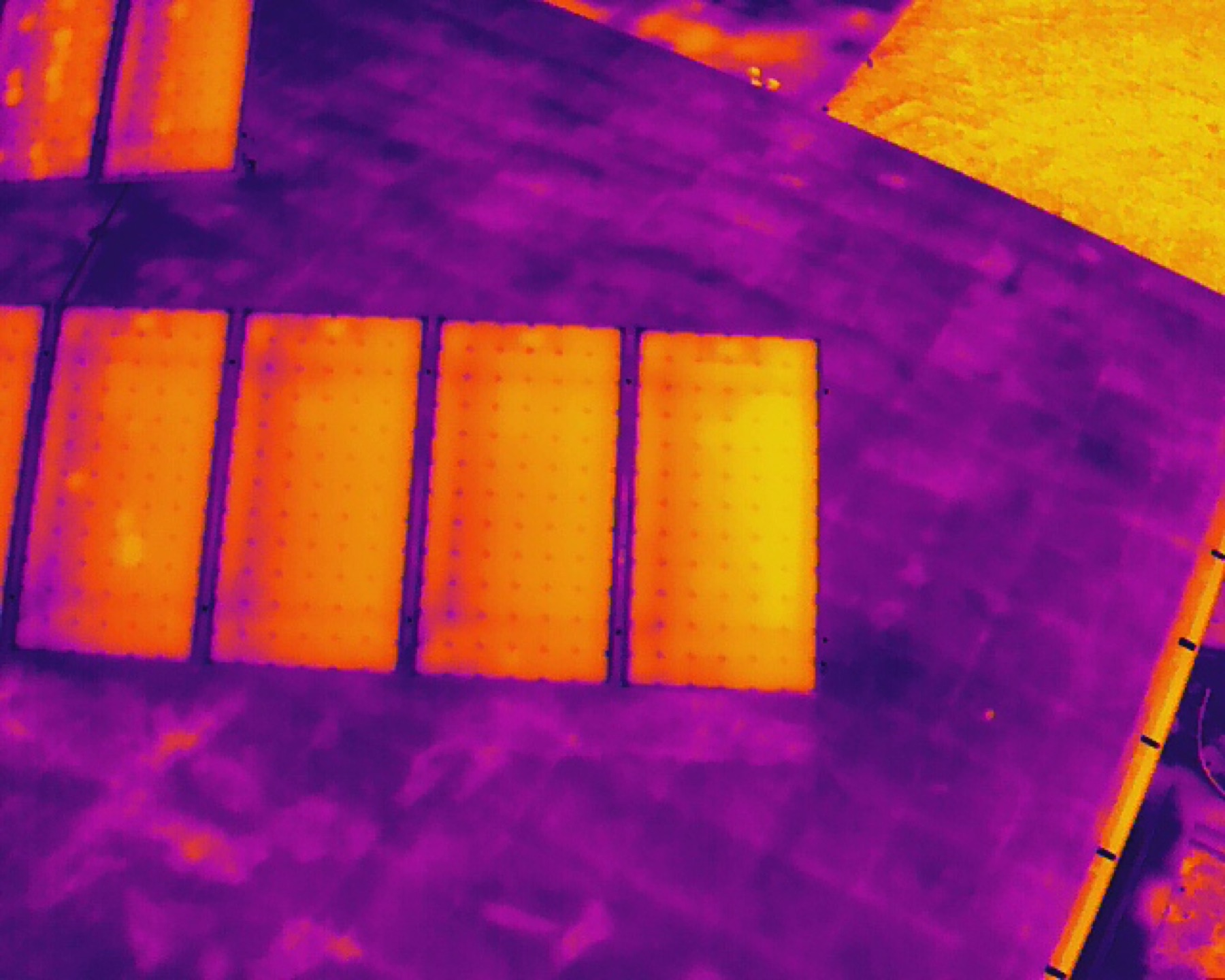
Dallas has an enormous amount of commercial square footage, from office towers along the Dallas North Tollway to warehouse parks off I-35E and the strip centers that line almost every major road in North Dallas. Most of the problems that cost building owners real money in that inventory can’t be seen with the naked eye: water trapped under a flat roof membrane, conditioned air leaking out of a rooftop unit, or an electrical connection running hotter than it should.
A thermal drone inspection in Dallas makes those problems visible. A FLIR infrared camera reads surface temperature, so wet insulation, air leaks, and overheated components show up as clear warm or cool patterns. Desert Drones LLC provides FAA Part 107 certified thermal drone inspections for Dallas commercial properties, giving owners, managers, and contractors a full picture of a roof or building envelope without sending a crew across every square foot.
Why a Thermal Drone Inspection in Dallas Pays Off
North Texas weather is hard on commercial buildings. The same roof might bake through a long summer, get hammered by spring hail, take on water during a heavy thunderstorm, and then go through a few hard freezes in the winter. Every one of those cycles puts stress on roofing membranes, seams, flashing, and the equipment sitting on top of the building.
Flat roofs and hidden moisture
A large share of Dallas commercial property is under low-slope roofs: TPO, modified bitumen, built-up roofs, and older gravel-ballasted systems. When water gets under the membrane, it soaks into the insulation and spreads out sideways. From the surface, the roof can look fine for months while the deck underneath slowly deteriorates. Wet insulation holds heat differently than dry insulation, which is exactly what a thermal camera picks up after sunset.
HVAC and building envelope losses
Rooftop units work hard in a Dallas summer. Damaged duct connections, poorly sealed curbs, and gaps around penetrations let conditioned air escape. On the walls, missing insulation or air leaks around windows and expansion joints show up as temperature differences on the exterior. Those losses add up on utility bills, and they’re easy to miss without imaging.
Electrical hot spots
Overloaded breakers, loose connections, and failing components often run warmer than the parts around them. Thermal imaging of rooftop electrical equipment, disconnects, and solar arrays can flag those warm spots so a licensed electrician knows where to look first. We document what the camera sees; your electrician or engineer handles the diagnosis and repair.
Older buildings with layered repairs
Neighborhoods like Deep Ellum, the Design District, and parts of Oak Cliff have older commercial buildings that have been patched, recovered, and re-roofed several times over the decades. Layered roofs can trap moisture between old and new materials, and it’s hard to know what’s going on under the top layer without opening it up. A thermal scan gives owners a starting point before they decide where to cut test cores or how much of the roof needs to come off.
Big buildings, limited access
Walking a 200,000-square-foot warehouse roof in Carrollton or Garland with a handheld camera takes a long time and puts people on the roof. A drone can cover the same area quickly, capture consistent images from above, and build a complete map of the roof that’s easy to share with everyone involved.
How a FLIR Drone Inspection in Dallas Works
You don’t need to know anything about drones or infrared cameras to book an inspection. Here’s how it usually goes.
Step 1: Scope the building
We start with a conversation about the property, what’s been going on, and what you need the results for. Maybe you’ve had leaks in one area, you’re buying a building and want to know what you’re getting, or you’re planning a roof replacement and need a baseline.
Step 2: Check airspace and timing
Dallas sits near two major airports, Dallas Love Field and DFW International, plus several smaller fields like Addison. We confirm the airspace for your address and get FAA authorization if it’s needed. Then we pick a flight window. For roof moisture scans, the best time is usually after sunset on a clear day, when the roof is giving off the heat it absorbed during the day and wet areas stand out.
Step 3: Fly the thermal and visual passes
Our pilot flies the drone in a planned pattern over the roof, capturing both thermal and regular color images. The color photos help match each thermal reading to what’s physically on the roof, like a drain, a patch, or a unit.
Step 4: Review and report
Back at the office, we review the imagery and organize it into a clear, easy-to-read report with marked areas of interest and paired thermal and visual images. You get something you can hand to your roofer, insurance adjuster, or facilities team without needing to translate it.
What the report includes
A typical report includes an overview map of the full roof, close-up thermal images of each area of interest, and a matching color photo for every thermal frame. We note the date, time, and weather conditions during the flight, since those affect how the readings should be interpreted. If you’re comparing results over time, those notes make it possible to run the same scan again next year under similar conditions.
Reports are delivered digitally, so they’re easy to forward to a roofer, a building engineer, or an ownership group. Many property managers keep them on file as part of the building’s maintenance history.
Step 5: Follow-up and verification
Thermal findings point to likely problems. Your roofing contractor can confirm them with core samples or a moisture meter, and repairs can be targeted to the right spots instead of guesswork.
Who Uses Thermal Drone Inspections in Dallas
Commercial property managers. Managers of office parks in Richardson, Plano, or Las Colinas use thermal scans to catch roof and envelope issues early and plan budgets with real information.
Roofing contractors. A thermal map helps roofers show clients exactly where wet insulation is, quote repairs accurately, and decide whether a section can be restored or needs to be replaced.
Insurance adjusters. After a big storm, thermal and visual images give adjusters a documented record of roof conditions to support a claim review.
Solar installers and owners. Thermal imaging can spot panels or strings running hotter than the rest of the array, which helps narrow down maintenance needs.
Buyers and lenders. Before closing on a commercial building, a thermal inspection adds another layer of information to the due diligence process.
Why Desert Drones
Our pilots are FAA Part 107 certified, which is what’s required to fly drones commercially in the United States. That certification also lets us request airspace authorization near Love Field, DFW, and Addison when a property falls inside controlled airspace.
We work locally in the Dallas area, so we’re familiar with the building stock, the weather patterns, and the timing that gets the best thermal results in North Texas. We know a hot July afternoon isn’t the right time to look for wet insulation, and we plan flights around that.
Turnaround is fast, and deliverables are professional and organized. You’ll get clear images and a report you can actually use, not a folder full of unlabeled files.
We keep our claims simple. We capture accurate thermal and visual imagery and present it clearly. Your roofer, engineer, or electrician makes the final call on repairs. To see the full range of infrared work we do, visit our thermal camera drone services page.
Dallas Thermal Inspection FAQ
When is the best time of year for a thermal drone inspection in Dallas?
Roof moisture scans can be done most of the year, as long as there’s been a sunny day to warm the roof and the evening is clear and dry. We avoid flying right after rain, since surface water can confuse the readings. Building envelope scans work best when there’s a big difference between indoor and outdoor temperatures.
Does the drone need to land on my roof?
No. The drone flies above the roof and captures images from the air. Nobody needs to walk the roof during the scan.
Can thermal imaging find a roof leak?
Thermal imaging shows where wet insulation is likely sitting under the membrane, which usually points to where water is getting in. A roofer can then confirm the source and make targeted repairs.
How is a drone scan different from a handheld thermal camera?
A handheld camera is great for checking a single wall or electrical panel up close. A drone covers an entire roof from above in one visit, with consistent angles and coverage, which makes it easier to see patterns and compare areas across a large building.
Do I need to be on site during the inspection?
Not usually. We’ll need permission to access the property and launch area, and a contact in case anything comes up. Many inspections happen in the evening after tenants have gone home.
Schedule Your Dallas Thermal Inspection
Ready to find out what’s happening under your roof? Contact Desert Drones LLC for a free quote on a thermal drone inspection in Dallas. We serve Dallas, Plano, Richardson, Irving, and the surrounding DFW area with FAA-certified pilots who know North Texas buildings and weather.
Call Desert Drones in Dallas: (469) 949-1776